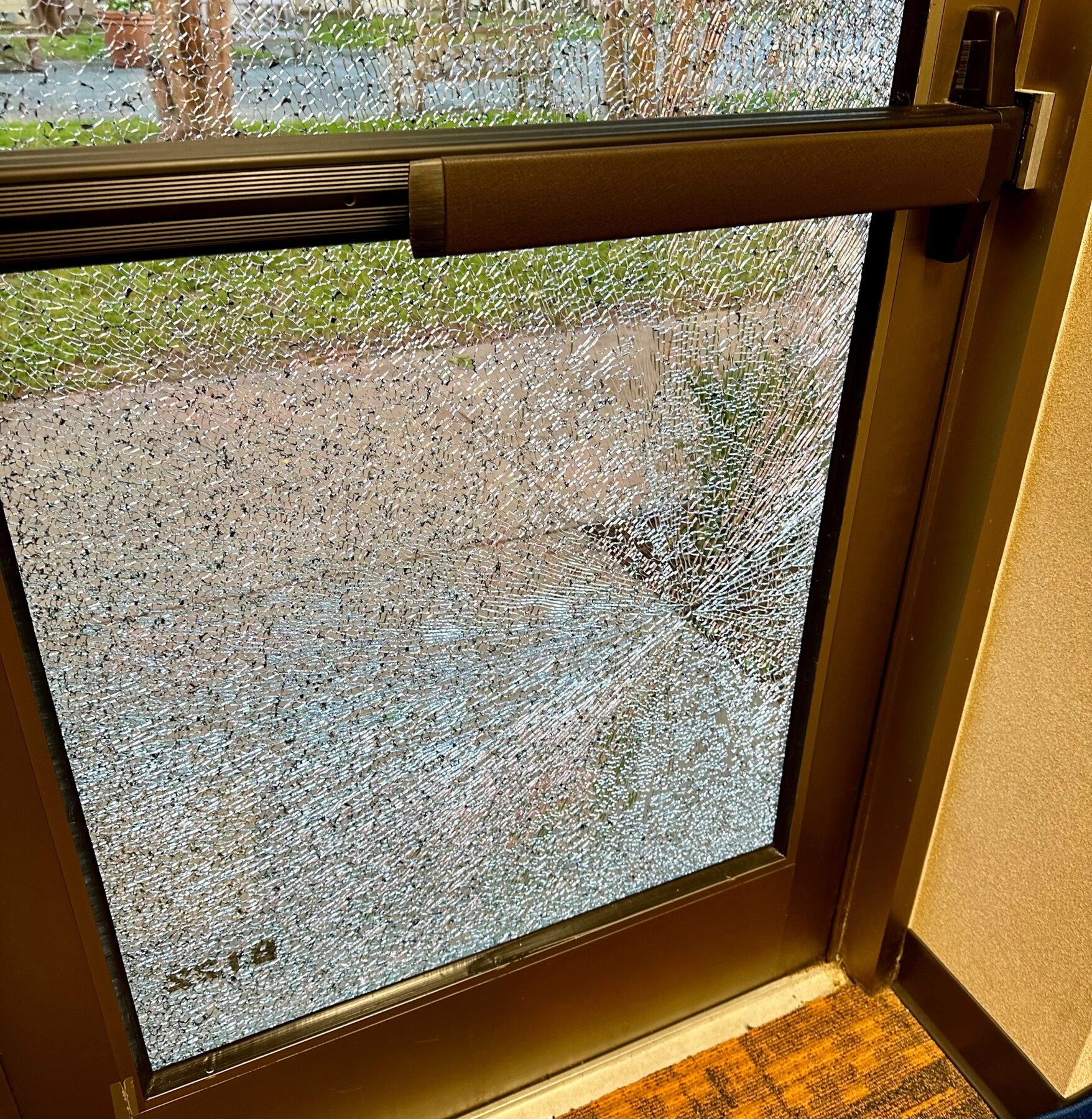
Fifteen and a half miles of window film. Eleven thousand windows. Two forty-four-storey towers that never closed for a single day of it.
I was the project manager on the Century Plaza Towers film installation in Century City, California. It remains the clearest demonstration I have seen of what window film does to a building’s operating cost — and the numbers are public, because 3M published the case study.
The building, and the problem
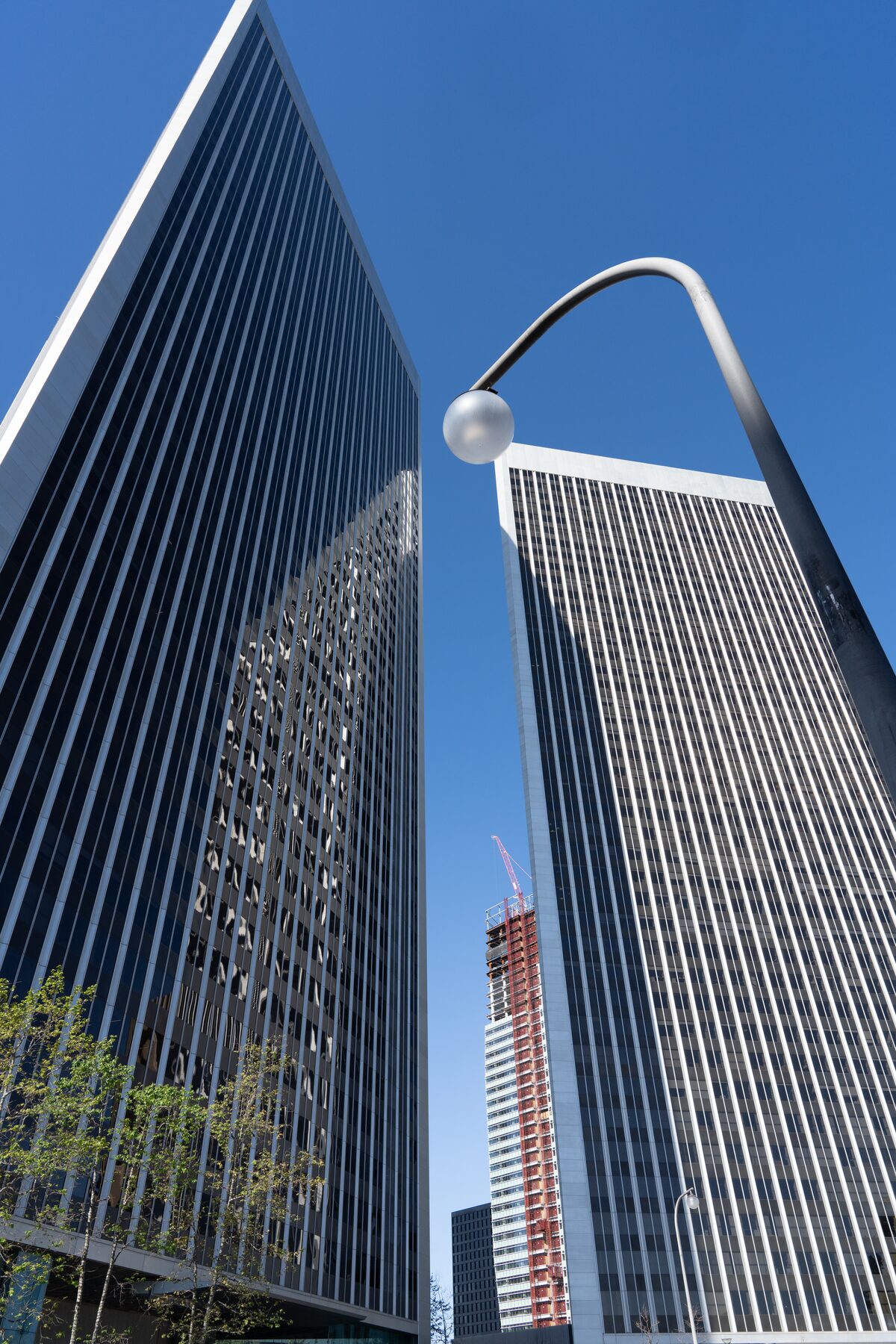
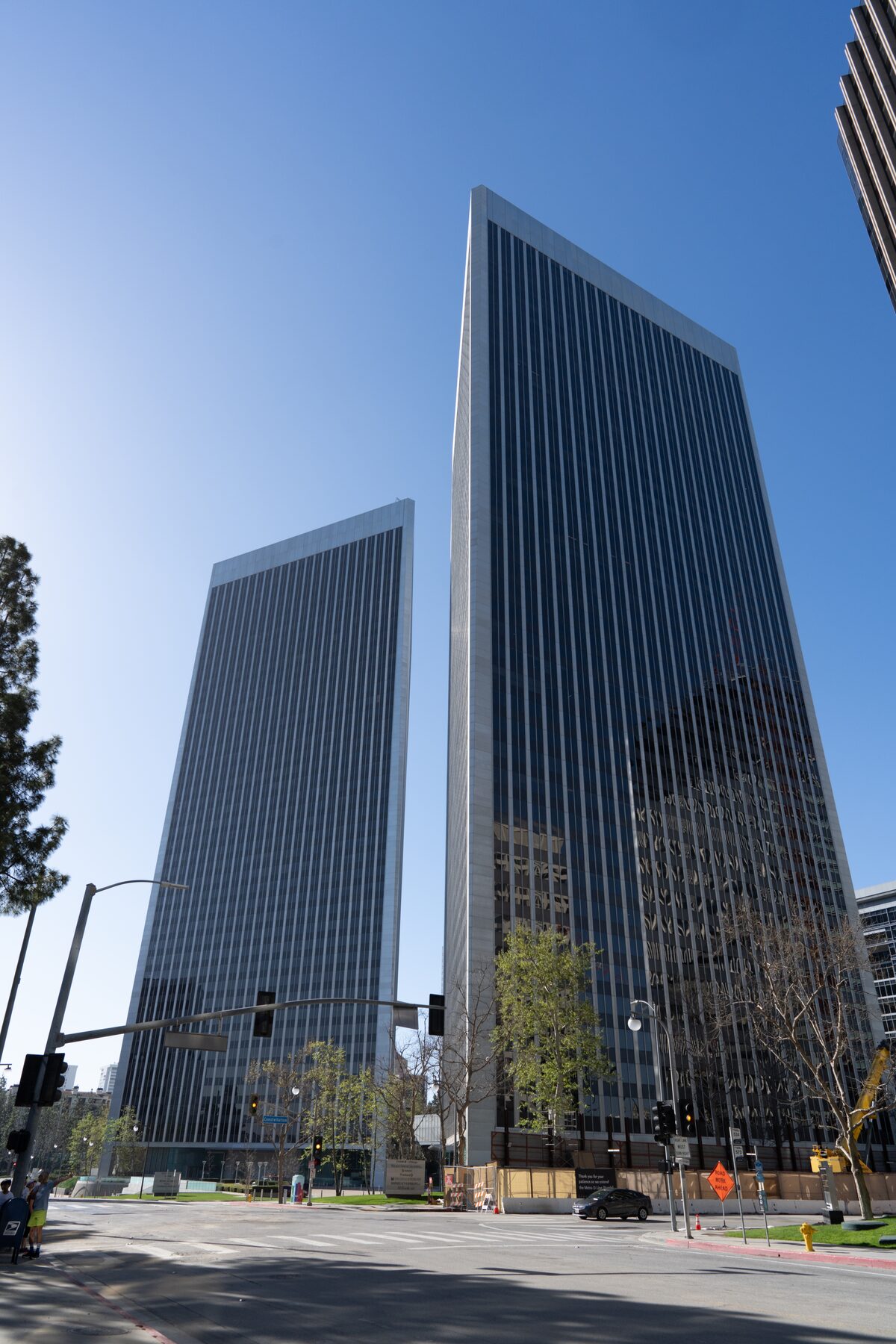
Century Plaza Towers is two 44-storey towers totalling 2.3 million square feet of class A office space. Each tower is three-sided. That geometry is part of what makes them a landmark, and it is also the root of the problem: over the course of a day the solar load moves around the building and never really lets up.
The practical consequence was temperature imbalance. Tenants on the sun side were uncomfortable while the system was still conditioning the shaded side. Property management at CB Richard Ellis had already pursued other efficiency measures — irrigation management, waterless urinals, a lighting retrofit — and window film was next on that list.
Why Neutral 35
On a landmark you cannot simply pick the darkest film on the shelf. These towers have appeared in more films and television than most buildings in Los Angeles, and the glazing is part of their identity.
The specification was 3M Sun Control Window Film Neutral 35 — high heat rejection with a neutral appearance rather than a mirrored or coloured one. The honest surprise for me was that it improved how the towers read from the plaza. Film evens out the patchwork you get across a large elevation, where some panes have blinds drawn and some do not. Side by side with the before, the building looks more considered, not more tinted.
The number that drives everything else
Neutral 35 rejects 56% of total solar energy on single-pane clear glass.
Total solar energy rejection is the figure that matters to a building operator, and it is worth being precise about why. It is not shading and it is not glare. It is the proportion of the sun’s energy — visible light, infrared and ultraviolet together — that never becomes heat inside the building.
Reject 56% of it across 11,000 windows and the chiller is no longer fighting the same building. What changes is not just the thermostat reading but the duty cycle: the system reaches setpoint sooner, runs shorter cycles, and spends less of the afternoon at full tilt. Less run time is less energy, less wear, and fewer service calls.
What it saved
According to the published case study, building management saves 155,000 kWh per month following the installation. Utility bills began dropping immediately.
The Los Angeles Department of Water and Power rebated $116,000 of the project cost. And the payback period, in the words of CB Richard Ellis’s Vice President, was seven and a half months — she described it as one of the easiest capital projects they had ever done.
That is the part building operators tend not to believe until they see it documented. A capital improvement that pays for itself inside a single cooling season is rare.
The comfort case, which is harder to put on a spreadsheet
The energy figure is the one that gets a project approved. The comfort result is the one that gets you renewed.
A tenant sitting beside west-facing glass in the afternoon does not experience “solar heat gain”. They experience a hot desk, a screen they cannot read, and a thermostat that appears to be lying to them. Nothing generates complaints to building management like a floor that is two different temperatures.
Rejecting the heat at the glass — rather than removing it afterwards with more cold air — is what makes a floor consistent. The system stops overcooling the shaded side to compensate for the sunny one. That is a comfort improvement and an energy improvement at once, from the same intervention.
How buildings this size actually pay for it
Two things make large film projects far more achievable than operators expect.
Utility rebates. Many providers treat window film as an energy conservation measure and rebate accordingly. At Century Plaza that was $116,000 straight off the project cost. Programmes vary by provider and change year to year, so check before you budget, not after.
PACE financing. Property Assessed Clean Energy lets qualifying energy improvements be financed through an assessment on the property rather than a conventional loan. For a project with a payback measured in months, the arithmetic tends to work out comfortably. Availability and terms depend on your jurisdiction.
Rebate plus financing, against a sub-twelve-month payback, is why more operators should be looking at this. The film is not the interesting part. The operating cost is.
Working around a building that never closes
One practical note, because it is the question I always get asked. Century Plaza stayed open and occupied throughout — not one tenant lost a working day to it.
The pace was one floor every night, after hours, plus weekends. Floors 2 through 44, across both towers. Crews went in once the floor had emptied, filmed it, cleaned up and were gone before the building came back in the morning. Four months start to finish, and roughly 15.5 miles of 48-inch film through the door.
Three windows on the 34th floor had to be done from the outside.
That is the highest I have ever been on the exterior of a building, and the part nobody pictures is the tethering. Every tool tied off — every blade, every squeegee, every roll, every spray bottle. At that height a dropped hand tool is not a dropped tool. It reaches the pavement at a speed that does not care what it hits. You check the tethers, you check them again, and then you start work.
It is also the part of this trade I would not trade for anything. Most of the job is a floor at a time in an empty office at two in the morning. Occasionally it is thirty-four storeys up on the outside of a Century City landmark, filming three panes of glass that nobody will ever notice.
Film is one of the few envelope improvements that can be done this way. No scaffold, no glazing replacement, no tenant relocation. Work a floor at a time, out of hours, and in the morning the only difference anyone notices is that the room is more comfortable.
Where to start on your own building
The honest answer is that you should not take anyone’s word for it, including mine. You should have the building modelled.
We can run an energy audit covering three things: your actual glazing — type, orientation and area; your HVAC system and how it is currently behaving; and a retrospective analysis of your last 24 months of energy use. That produces a projection for your building rather than a number from someone else’s.
If the figures work, they will be obvious. If they do not, you will have learned that cheaply.
Houston Solar & Security Film installs commercial solar control film across Greater Houston. For an energy audit of your building, call 346-375-8881.
Project figures are from 3M’s published case study on Century Plaza Towers, Century City, California. The installation was carried out by Campbell Window Film, with the author as project manager.